| |
Welcome to our April 2023 Newsletter!
|
| |
|
| |
The
Mona Lisa
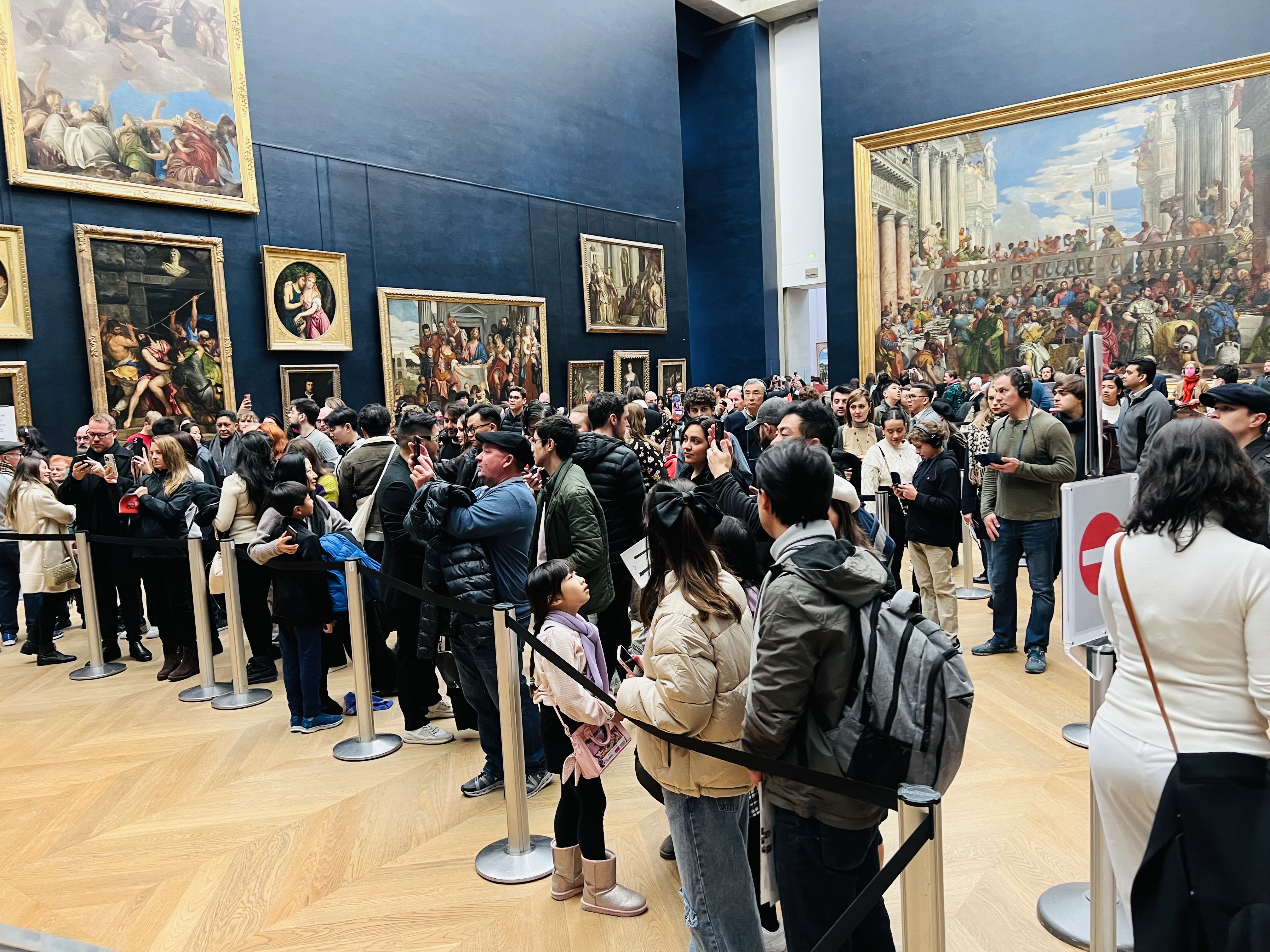
scene on a less-crowded day in November 2022.
As I have previously shared in this newsletter, I aspired to be a novelist from a young age. I arrived at the University of Chicago as a first-year college student with the intention to enroll in every English class that fit into my schedule—only to learn, much to my dismay, that I wasn’t even allowed to declare a major until my second year. In the meantime, I had to fulfill a bunch of General Education requirements that, to my eighteen-year-old mind, only represented a massive setback on the path to literary stardom.
Three decades later, I understand the tremendous value of General Education and am grateful I was required to study a broad range of disciplines. In fact, I wish someone had encouraged me to slow down and explore other majors, as I might have discovered much earlier my interest in photography. I have a good quality DSLR camera and actively pursued this hobby for many years, yet in my recent travels, I have opted to use only my iPhone, as picture quality has improved drastically, and it’s so much easier to carry and far less conspicuous.
However, I recently recommitted to my practice and dusted off the DSLR, thanks to a photographer cousin who offered to mentor me. Last weekend, we got to discussing the question, “What does it mean for a photo to be ‘realistic’?” For example, consider the use of a wide-angle or telephoto lens to capture a scene that technically existed, even if your own eyes did not actually see it that way. Is the photo still “real”? What if you use photo processing software to enhance images or remove details from them?
Even if you’re not a hobbyist photographer, think about our use of social media and the ways in which we share snapshots that seek to cultivate particular narratives about ourselves: Look how much fun I’m having! Check out this amazing meal I enjoyed! See how in love we are! Everywhere we go, people are on their cell phones, seemingly more intent on capturing Amazing Experiences to post on social media than living in the moment. Check out the picture above, taken at the Louvre Museum where Mona Lisa is displayed. Hundreds of thousands of visitors from around the world stand in line each year, jostling each other so they can take the same photo: “Here I am with the Mona Lisa.”
Now, to be real, did I wait in line and quite possibly elbow somebody in the ribs when it was finally my turn to get a Mona Lisa selfie? Of course. I’m no different from anyone else. But the questions remain: Why do we post what we do? Is any of it real? Who “likes” it, and does it actually mean anything to accumulate followers and likes? What are we trying to prove, to whom, and why? How can we cultivate a sense of worth, in the moment, that is independent of anyone else’s “likes” and approval?
In recommitting to my photography practice, I’m seeking to reconnect to the process of learning to take photos that are meaningful to me, simply for the joy of learning and honing my skills. In a similar vein, The Academic Self, Donald Hall explains that “we cannot tie our sense of accomplishment solely to a specific, immediate response to our work. Therefore, even as we articulate professional goals carefully, we should remember to invest with the greatest worth the involvement with and completion of a particular project, rather than its immediate reception.”
I’m going to try to hold onto that idea, and hope you will as well, as we go about our personal and professional lives. What are the things you do just for yourself, for the pure joy of creation or to just be in the moment? With the end of the semester fast approaching, I hope each of us carves out time each week to honor those pursuits and live a few moments, off camera, just for ourselves.
Magdalena L. Barrera
Vice Provost for Faculty Success
|
| |
|
| |
Updates from the Center for Faculty
Development and eCampus
|
| |
|
| |
Our support of our students begins with trusting and learning from the expertise of our faculty colleagues. Each day, you demonstrate best practices in equitable and inclusive teaching, you form lasting relationships with your students, and you strive for not only innovation, but excellence. This happens in so many different ways: How you draw students to your office hours by explaining why they’re meaningful or even by renaming them (e.g., “student meeting hours”), in the ways you take time to get to know your students by sending them personalized communication early in the semester, by exploring and carefully experimenting with equitable grading strategies and course policies, or even how you use and encourage your students to use each others’ names and pronouns (sometimes with an assist from Zoom or table tents), and more!
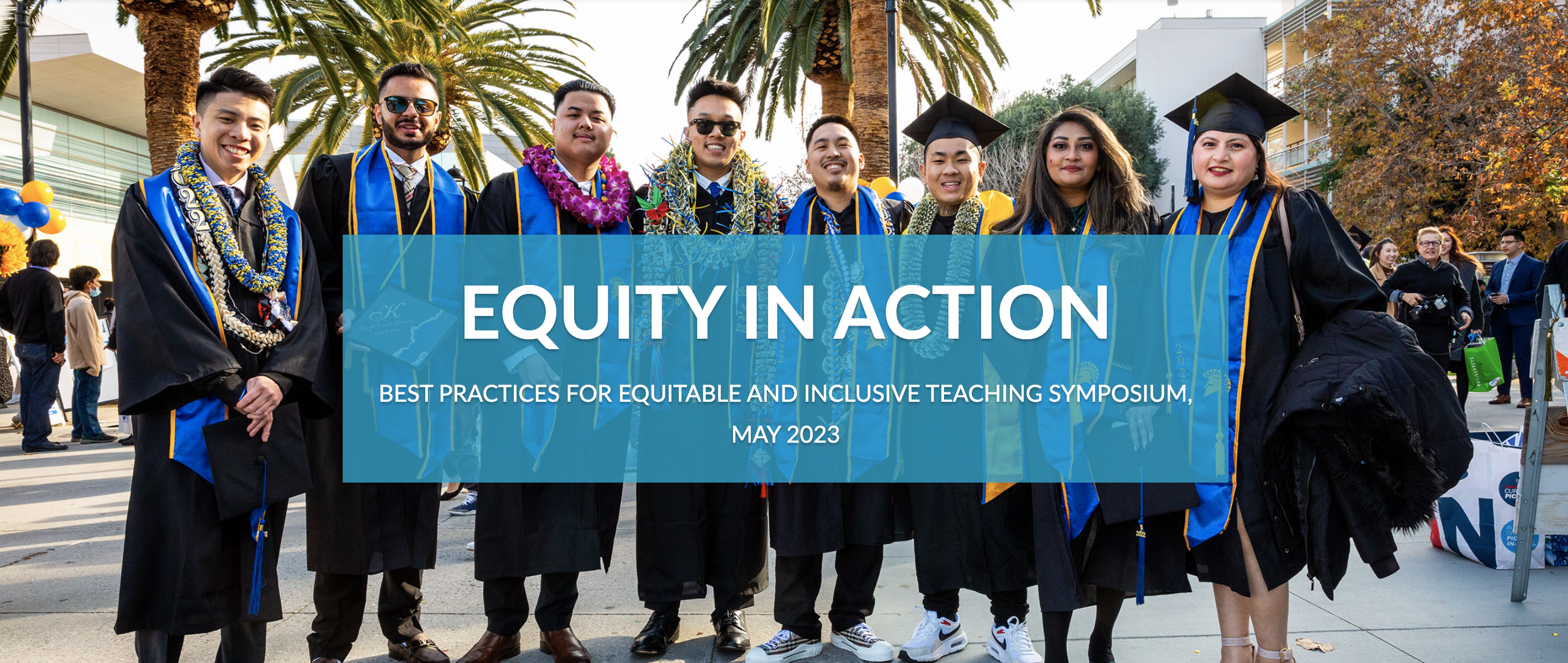
At our Equity in Action Symposium (Monday, 5/1, 8:30-1:30 in MLK Library), you’ll have the opportunity to share your own best practices, and to learn from each other how we can support students through equitable and inclusive teaching. Topics will include: Asset-based teaching and growth mindset, academic integrity and equity, instructor/classroom policies, addressing late and missing work, alternative assignments, equitable grading practices, nurturing relationships and fostering a sense of belonging, and building equitable and inclusive student groups and teams. There are still a few seats remaining, so please register by 12 pm on Monday, April 24th.
|
| |
|
| |
To participate, use your Ally Course Accessibility Report in the left hand navigation menu on Canvas or click on the gear icons next to your course content and follow the step-by-step guide. If you’re not already familiar with Ally, please view this quick introduction to Ally video. Creating accessible content benefits all students!
For your fixes to be counted, you must make them on May 18th using Ally’s instructor feedback panel on Canvas.
Want to join a Fix your Content Day Drop in Session? Have questions or need assistance? Register here to join eCampus staff in a live Zoom session on May 18th anytime between 10am and 12pm. Attendees who submit images showing an improvement of their Ally course accessibility score will be entered in a Gold Points drawing!
Join us and a larger global community dedicated to delivering inclusive learning experiences! Last year, 182 unique institutions participated across 13 countries resulting in 110,248 accessibility fixes!
Useful Resources
|
| |
|
| |
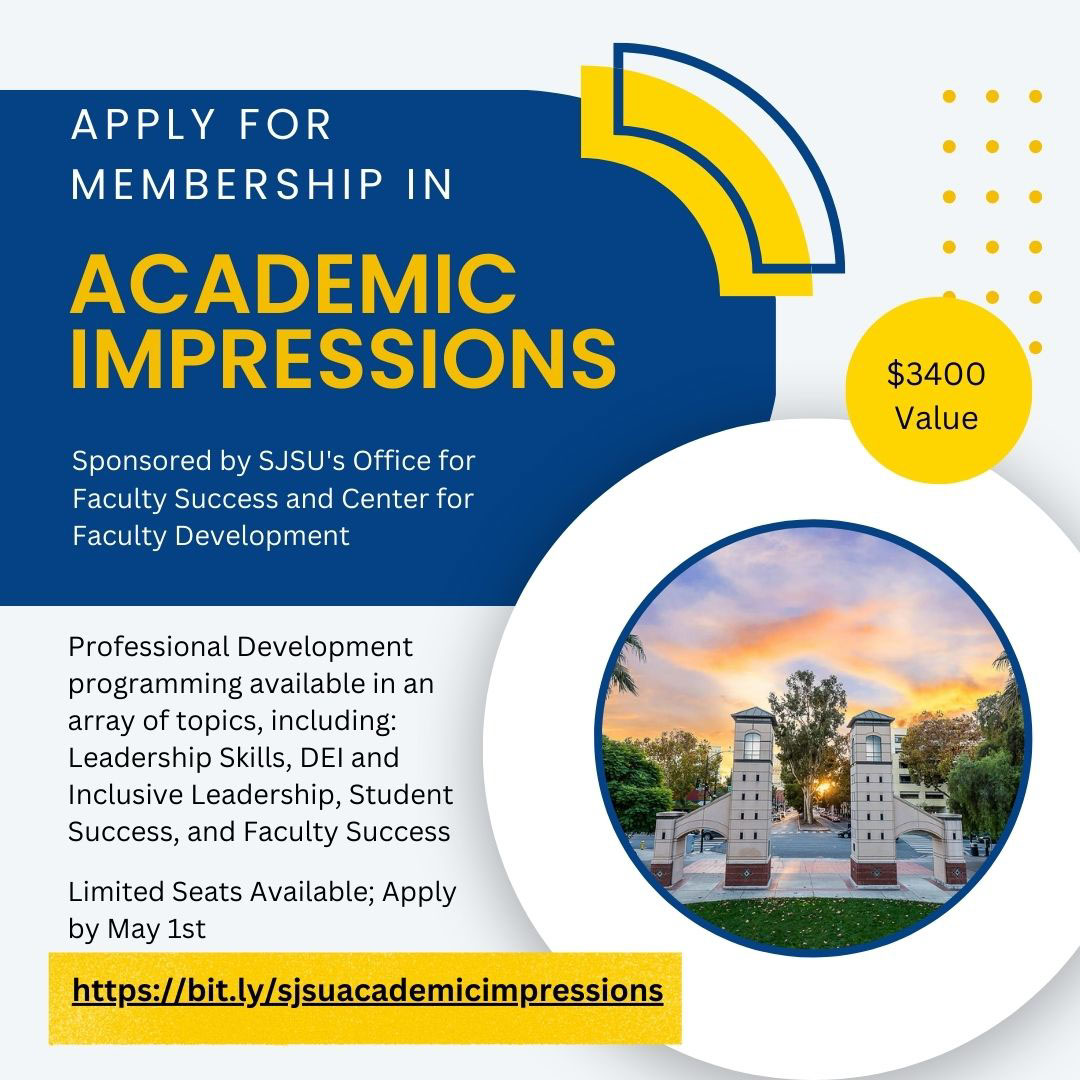
SJSU has a membership to a variety of educational organizations that offer resources to enhance professional skills. This includes Educause, an organization that focuses on information technology topics related to higher education; the Online Learning Consortium, an organization which supports the development of quality digital teaching and learning experiences; and Quality Matters, an organization centered around online course quality assurance. Visit each website to learn more.
|
| |
|
| |
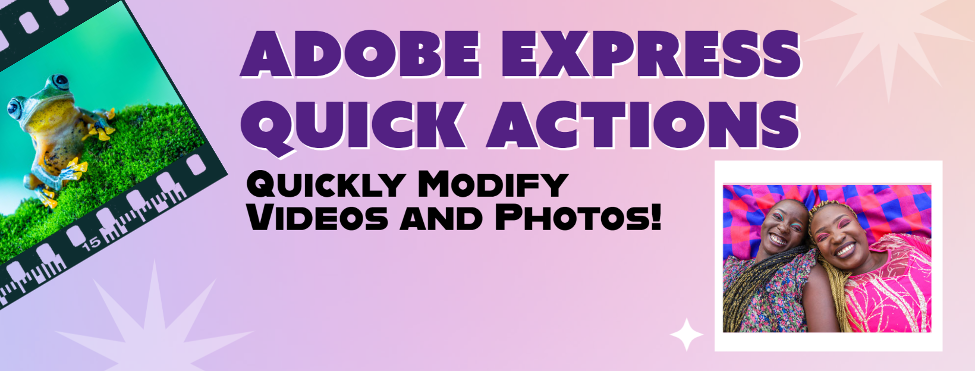
Did you know Adobe Express added some quick actions that make modifying videos and photos simple? You no longer need to use Adobe Photoshop or Premiere Pro to edit photos and videos.
Some of the quick actions are:
- Remove the photo’s background
- Resize or crop an image
- Convert a video to a GIF
- Trim or resize a video
- Merge videos
- Change the speed of a video
Adobe Creative Cloud is free for faculty, staff and students. To gain access, see the eCampus Adobe Creative Cloud for Employees webpage.
|
| |
|
| |
We’re happy to share that
Qualtrics -
SJSU’s campus wide survey platform, offers new additional functions.
- Basic Text iQ
- This tool aggregates and analyzes received text responses. It uses the power of machine learning to categorize these responses. It also produces interactive and trend views of these data.
- Basic Stats iQ
- Stats iQ provides the tools for data analysis with simple functionality. It produces statistical tables and visuals needed to display all collected information.
- Basic Quotas
- Quotas create lists of items in a question and determine what will happen once the quantity preselected is met. One example is time slots for project presentations. You can present your students with several different available time slots, and when each student selects a time slot, it is removed from the list. Another potential use is paper topic selection. You could set up a quota on a number of possible paper topics for students to choose and distribute the survey to the students. Once the student selects the topic, and the quota has been met, Qualtrics removes that topic as an option.
- Advanced and Specialty Question Types
- The File Upload question type allows survey takers to upload files. The uploaded files are only accessible to the survey creator and/or collaborators. Uploadable file types include spreadsheets, pdf, and documents (doc, docx, txt, odt). It is possible to upload multiple files in a single Zip file as well.
- Captcha Verification can help with preventing bots from filling out your survey.
- The Signature Question is just that: You can use it to collect a signature on the survey.
- Highlight Questions include text that is selected for the survey takers along with choices to vote on that passage of text.
|
| |
|
| |
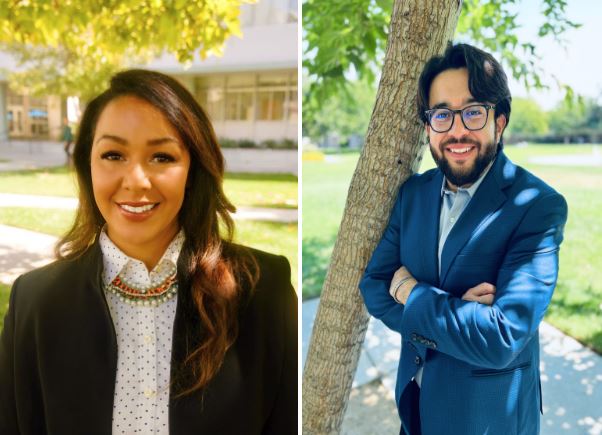
Congratulations to Dr. Veneice Guillory-Lacy, Assistant Professor of Educational Leadership, and Dr. Jonathan Gomez, Assistant Professor of Chicana and Chicano Studies, for their acceptance into the
ELEVATE Program
, which is sponsored through Rutger University’s Center for Minority Serving Institutions (MSIs).
ELEVATE is a highly selective cohort of early career faculty who come together to increase awareness of the educational contributions of MSIs, ensuring their inclusion in national conversations and increasing rigorous scholarship on such institutions. ELEVATE fellows connect with leading experts to enhance their writing, grant writing, teaching, and mentoring toolkits and navigate the professoriate. Last year, Dr. Kerri Malloy, Assistant Professor of Humanities, was the first SJSU faculty member invited to ELEVATE, and we are honored to have not just one but two more colleagues joining the program this year.
Dr. Lacy is a second-generation Black and Indigenous scholar who has over 19 years in different capacities in education as a HS English teacher, tribal college instructor, and HS principal. Her research focuses on amplifying the voices of women of color in K-12 educational leadership, promoting social justice and emancipatory leadership practices, and freedom dreaming that leads to critical pedagogies and transformative educational spaces.
Dr. Gomez, a Chicano scholar and poet, currently serves as the Faculty in Residence for HSI Initiatives in the Office of the Provost, as well as the Faculty Director of the Culture Counts Reading Series at SJSU. His work examines the ways in which people who have been dispossessed and displaced envision and enact cultural practices to take possession of concrete spaces across the city as strategies for refusing the unlivable destinies to which they have been relegated.
We applaud our colleagues for their commitment to building partnerships across MSIs that will enrich the learning experience for SJSU students and faculty alike!
|
| |
|
| |
April
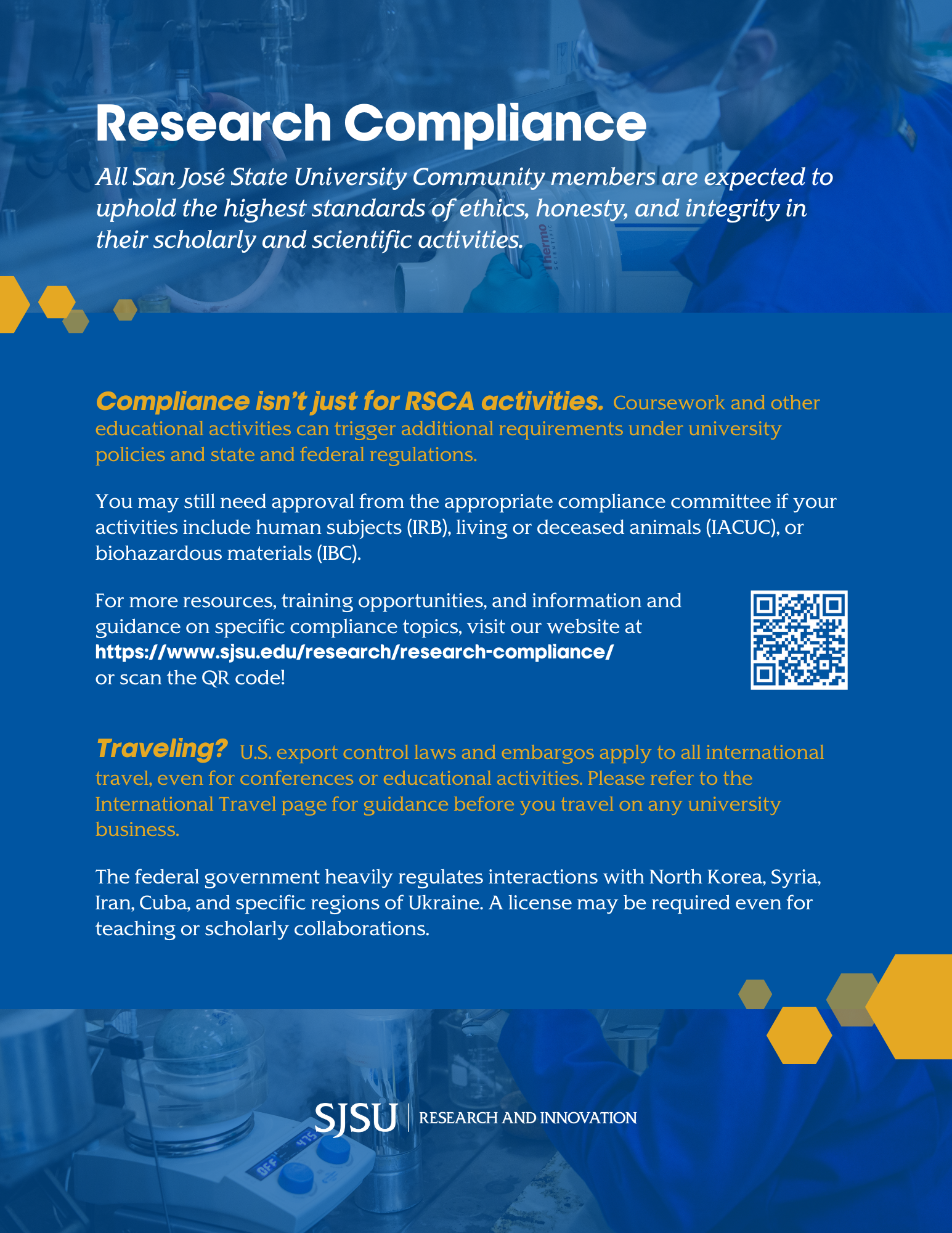
25: Post-Tenure Review: Department-level evaluations due to PTR Faculty
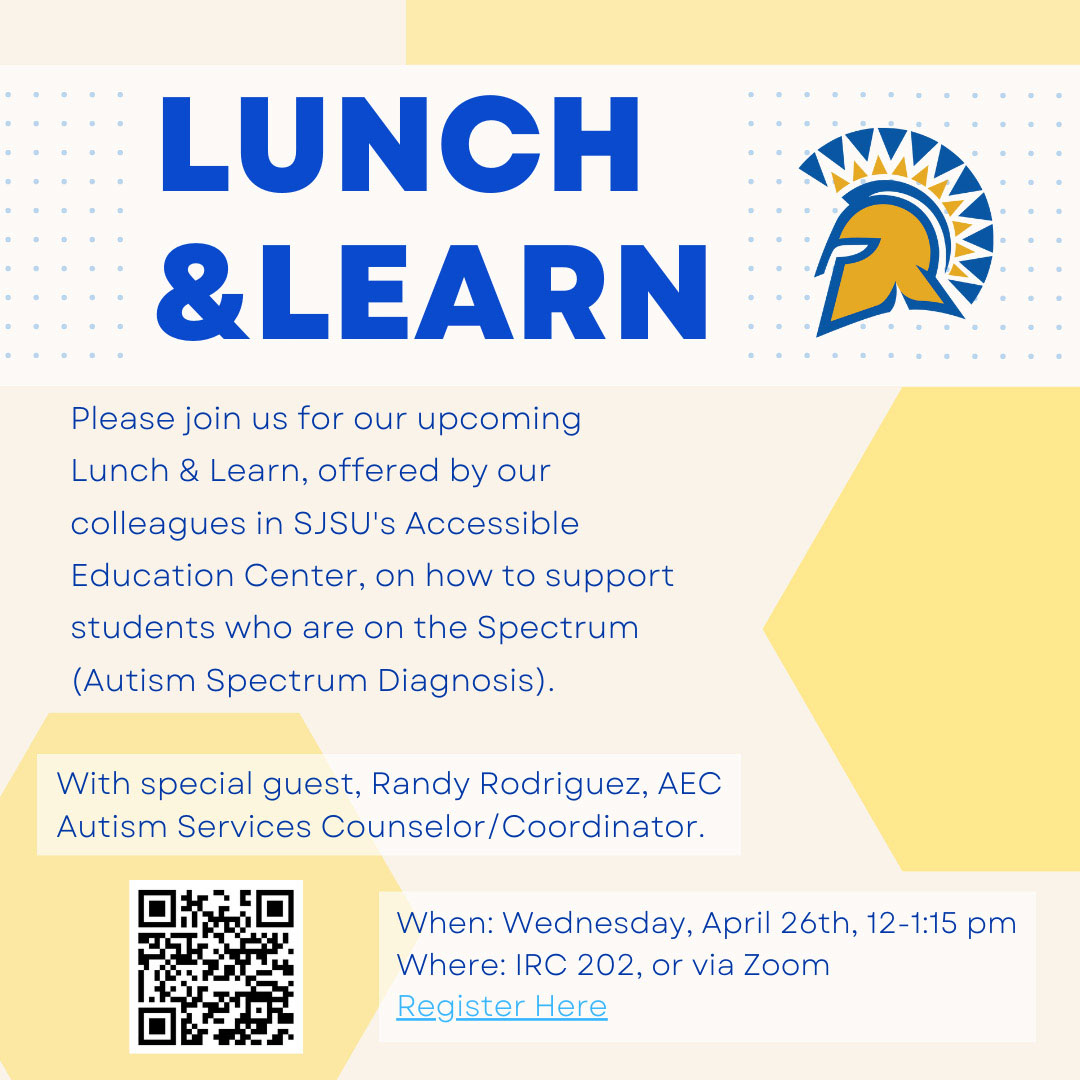
26: SJSU Annual Artist and Author Celebration
May
1: Mini-Review: College-level evaluations shared with candidates
8: RTP: Provost’s recommendations shared with candidates
12: Cumulative Evaluations: College-level evaluations sent to faculty
15: Last day of instruction
16: Study/conference day [no classes]
17-19: Final Exams
18: Global Accessibility Awareness Day / Fix Your Content (for greater accessibility) Day
19: Post-Tenure Review: College-level comments shared with faculty
22-23: Final Exams
24: Final Exam Make-Up Day
24-26: Commencement
26: Grades due from faculty and end of AY22-23
29: Campus closed
June
1: RTP: President’s decisions released to candidates and Unanimous Retention decisions released
|
| |
|
| |
The Prejudicial Logic of Productivity
: “Like the cultural taxation incurred by BIPOC and female faculty, disabled faculty members experience disability taxation—that is, added layers of labor that are wholly unrecognized and unremunerated.”
|
| |
|
| |
Do you have a story, highlight, reading, or tip that you would like to share in this newsletter?
Please reach out anytime to
faculty-success@sjsu.edu
.
|
| |
|
| |
Contact Us
Magdalena L. Barrera, Ph.D.
Deanna Fassett, Ph.D.
Jennifer Redd, Ph.D.
Follow us on our socials:
|
| |
|
|
|