Myers-Lipton, Scott
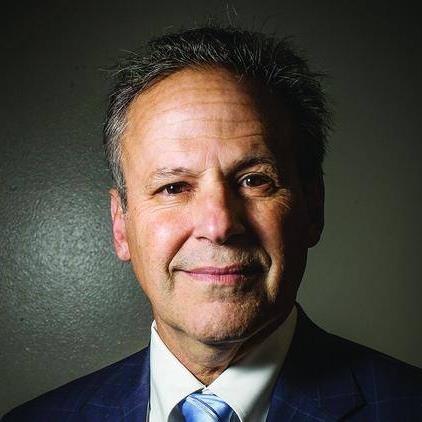
Professor, Sociology and Interdisciplinary Social Sciences
Preferred: smlipton@sjsu.edu
Alternate: smlipton@gmail.com
Interests
Social action, poverty and wealth, institutional racism and sexism, community change, and service-learning
Education
Doctor of Philosophy, Sociology, University Of Colorado at Boulder, 1994
Master of Arts, Humanities, San Francisco State University, 1989
Teaching Credential, Mills College, 1985
Bachelor of Arts, Political Science, University of San Diego, 1983
Bio
Dr. Scott Myers-Lipton, Professor Emeritus of Sociology at San José State University, is the author of five books, including:
- CHANGE! A Student Guide to Social Action (2023, Routledge, 2nd edition)
- CHANGE! A Guide to Teaching Social Action (2022, Routledge)
- Ending Extreme Inequality: An Economic Bill of Rights Approach to Eliminate Poverty (2015, Routledge)
- Rebuild America: Solving the Economic Crisis through Civic Work (2010, Paradigm)
- Social Solutions to Poverty: America’s Struggle to Build a Just Society (2006, Paradigm)
In addition, Dr. Myers-Lipton is the lead author of the Silicon Valley Pain Index and the author of Racial and Social Justice at San José University.
Dr. Myers-Lipton is the Director of the Teaching Social Action. In addition Dr. Myers-Lipton serves as an Advisory Board Member of the SJSU Human Rights Institute.
Dr. Myers-Lipton was the faculty advisor for the SJSU students successful effort to raise the minimum wage in San José from $8 to $10. He was also the faculty advisor for the the Gulf Coast Civic Works Campaign, an initiative to develop 100,000 prevailing wage jobs for local and displaced workers after Hurricane Katrina. In total, he has supported his social action students as they have won 17 campaigns from 2006-2023. In addition, Dr. Myers-Lipton has worked to help students develop solutions to poverty and inequality by taking them to live at homeless shelters, the Navajo and Lakota nations, the US Gulf Coast, and Kingston, Jamaica.
Dr. Myers-Lipton is the recipient of the Manuel Vega Latino Empowerment Award, San José/Silicon Valley NAACP Social Justice Award, the Elbert Reed Award from the Dr. Martin Luther King Jr. Association of Santa Clara County, the Changer Maker Award from the Silicon Valley Council of Nonprofits, the Teaching Effectiveness Award from the SJSU College of Social Sciences, and the SJSU Distinguished Service Award.
He lives with his wife, Diane, in the Bay Area. In addition, Scott and Diane are the proprietors of the The Sequoia, an event center dedicated to individual and social transformation.