Sociology Faculty
Interested in learning more about our faculty who make this department run and succeed? Read a few of our faculty's short biographies that share their story and impact!
View photo album here!
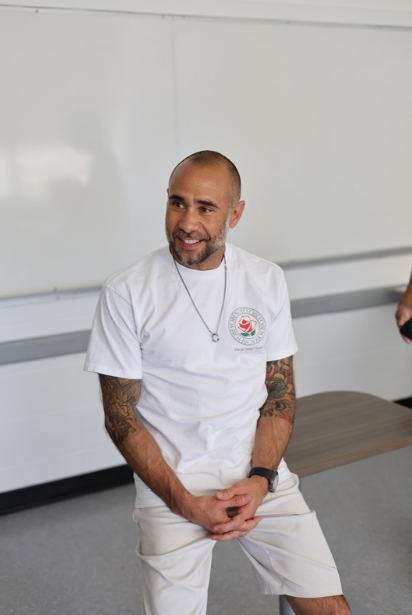
William Armaline is a Professor of Sociology and founder of the Human Rights Minor Program and Human Rights Institute at San José State University. His formal training and professional experience spans sociology, education, and human rights. Dr. Armaline’s interests, applied work, and scholarly publications address social problems as they relate to political economy, politics, human rights, education, criminal justice, and public policy. His most recent book with co-author Davita Silfen Glasberg (Human Rights Praxis and the Struggle for Survival, Routledge Press) examines the overlapping threats to human rights and survival posed by global capitalism in an increasingly turbulent and militarized world.
Outside of teaching and scholarship, Dr. Armaline serves as an Appointed California RIPA Board Member, an Executive Committee Member of the NAACP of SJ/SV, and as the Political Action Chair for the California Faculty Association (SJSU).
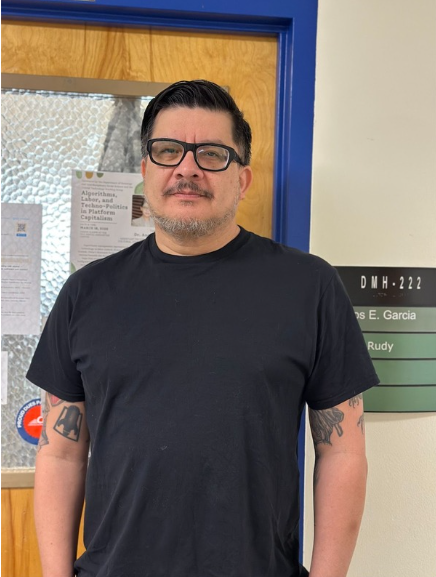
Dr. Carlos E. Garcia has been teaching sociology classes since 2000 and teaching at SJSU since 2006. In that time he has taught 14 different classes (to over 3000 students) but his favorite classes to teach are Introduction to Sociology and Quantitative Research Methods. In the past he has done research on immigrant communities in the US, public opinion on immigration, and health disparities. Carlos has two children. His daughter Katherine is an artist living in NYC and his son Luke is a soldier stationed in South Korea.
Dr. Mariana Manriquez was born and lived in Mexico, grew up in the U.S-Mexico Borderlands, went to graduate school at the University of Arizona, before moving to the Bay Area and becoming an Assistant Professor in Sociology at San José State University. Manriquez is passionate about teaching her students about how social theory can help us understand and make sense of the current world that we live in. Manriquez is particularly enthusiastic about understanding the relationship between work, humans and technology. She is currently working on a project about food delivery gig work in Mexico City, where she worked and hung out alongside couriers to understand their working lives in and through Internet-platforms.
Dr. Megan Thiele Strong, Ph.D. (she/they), is a Professor in the Department of Sociology and Interdisciplinary Social Sciences at San José State University. She is a sociologist and a social science writer and communicator whose work has appeared in academic journals including The Sociological Quarterly, Sage Open, The Journal of Higher Education and Socius, as well as in public facing outlets such as Inside Higher Education, The Chicago Tribune, The San Francisco Chronicle, The Hechinger Report, The Progressive, The Kansas City Star, The Sacramento Bee and Ms. Magazine. They are a Public Voices Fellow @TheOpEdProject and a member of the Scholars Strategy Network. They teach, research, and write at the intersections of social and environmental justice, mental health, education and policy. She knows we are meant to queer and revise the status quo in order to be socially and environmentally sustainable.

Dr. Morgan V. Sanchez is an Assistant Professor of Sociology at SJSU and a Public Voices Fellow with the OpEd Project. She holds a PhD in Sociology from the University of Florida, where she specialized in disability, families, and narrative. In the classroom, she's invested in helping students see sociology not just as an academic subject, but as a lens for understanding their own experiences and the world around them. Her favorite courses (Social Theory, Writing Workshop, and Social Policy) reflect this applicability.
When she’s not teaching, she enjoys writing fiction and tending a small herb and vegetable
garden, most of which ends up in homemade tea or on the table. She is also the proud
guardian of Yuzu, the most adorable dog in the world.