Teaching and Courses
Hands-on learning through shared digital environments, simulation and physical systems.
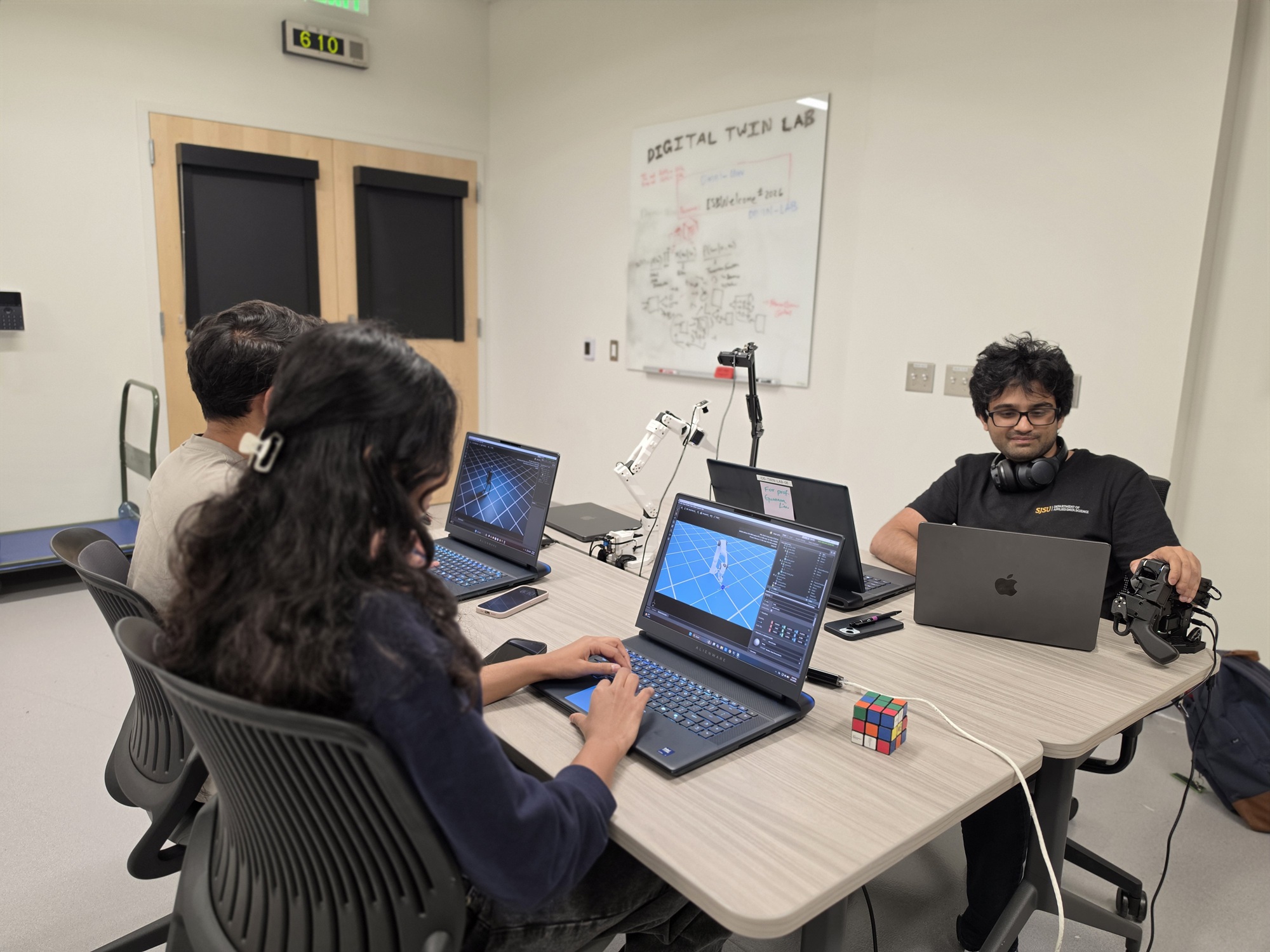
Students use shared simulation environments to develop, test, and discuss digital
twin and robotics workflows.
Teaching Mission
The Digital Twin Lab supports project-based teaching in which students learn by creating models, connecting data, testing scenarios, and evaluating how virtual and physical systems behave together.
Teaching Areas
- Digital twin foundations and architectures, including physical-to-digital relationships, synchronization, model fidelity, lifecycle management and digital threads.
- 3D modeling and interactive visualization of buildings, infrastructure, machines and robots.
- Sensor, IoT, and real-time data integration for connecting physical systems with their digital representations.
- Physics-based, data-driven, and hybrid modeling for simulation and prediction.
- Simulation and scenario analysis for evaluating designs, risks and operational changes.
- Robotics and physical AI simulation using Isaac Sim and Isaac Lab.
Synthetic data generation for perception, robotics and autonomous-system applications. - Digital twin validation, uncertainty, interoperability, explainability and appropriate model fidelity.
Learning Experiences
Courses can use the lab for guided exercises, semester projects, capstone work, demonstrations and interdisciplinary team assignments. Students may begin with a virtual model, add data or simulated sensors, test an operating scenario and then compare results with a physical system or real-world requirement.
Example Student Activities
- Create a USD-based model of a physical space, machine or robot.
- Build a sensor-to-dashboard pipeline for a digital twin prototype.
- Evaluate a robot policy in simulation before testing it on physical hardware.
- Generate labeled synthetic data and compare model performance against real data.
- Use a digital twin to evaluate energy, space utilization, mobility, maintenance or accessibility scenarios.
- Develop a natural-language interface that helps users query or interpret a digital twin environment.
Interdisciplinary Use
A shared digital environment allows students from different disciplines to examine the same system from different perspectives. A building twin, for example, can support work in data science, engineering, sustainability, facilities planning, user experience, business analysis and policy.
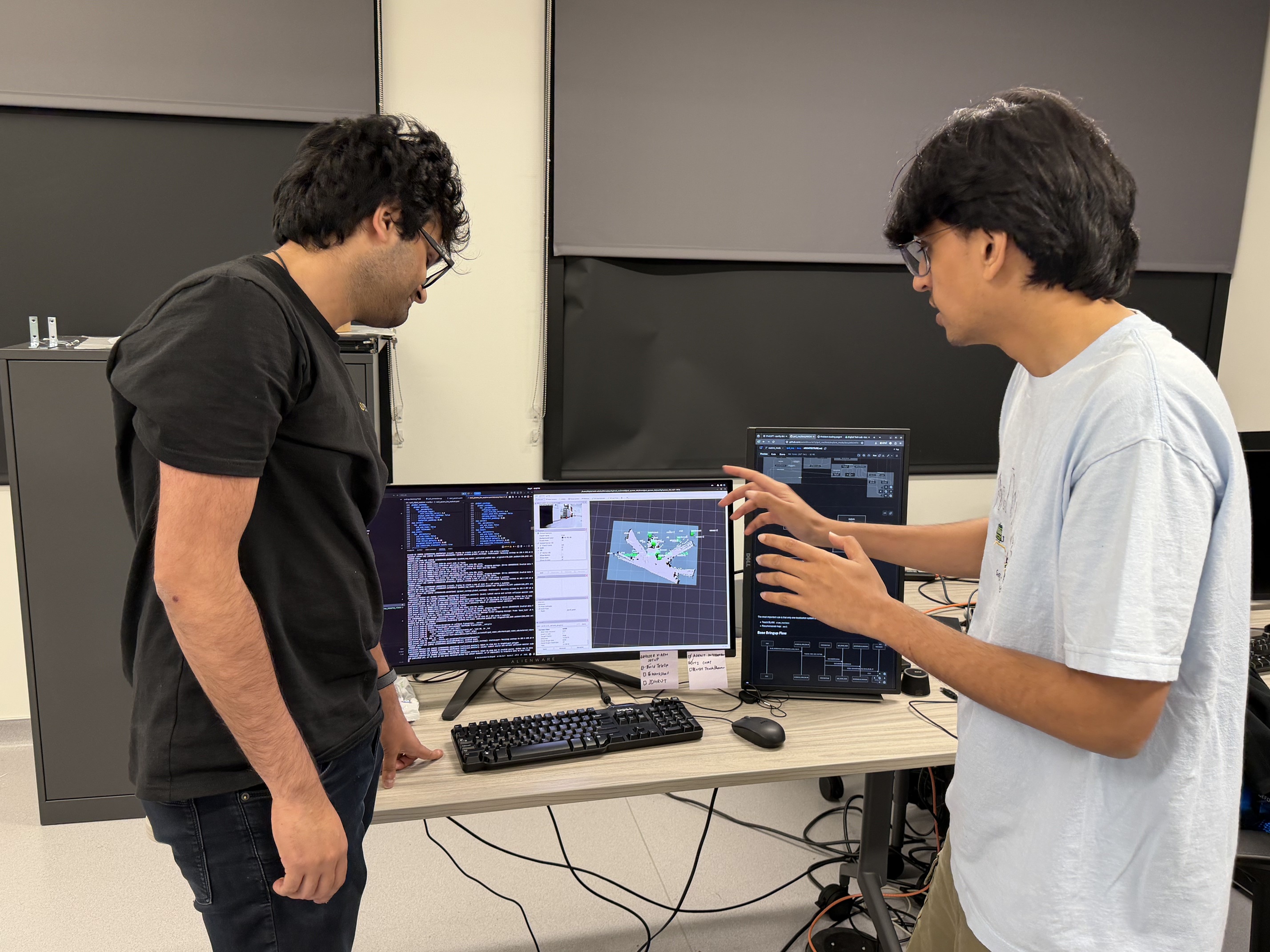
Collaborative review of a data-rich digital environment and system workflow.