Prepaying Travel Expenses
SJSU offers several ways to prepay for approved travel expenses, reducing the need for travelers to use personal funds and request reimbursement after the trip.
The appropriate prepayment method depends on the type of expense, who is traveling, and whether the travel is domestic or international. You can learn more by browsing this page or reviewing the SJSU Prepayment for Travel Expenses Matrix.
Employee Prepayment Methods
SJSU offers several prepayment methods for employee travel expenses. Learn about the benefits of each method.
Concur Booking Tool
Use the Concur Booking Tool to book airfare, hotels, rental cars, and train travel directly in the app. Expenses are automatically added to the employee’s Concur account and will be billed to a chartfield after the trip is complete.
Please note that hotels cannot be prepaid and will require a backup payment method.
Christopherson Travel Agency
Contact Christopherson Travel Agency to make travel arrangements for trips with complex itineraries or involving team travel. Expenses are automatically added to the employee’s Concur account and will be billed to a chartfield after the trip is complete.
Please note that hotels cannot be prepaid and will require a backup payment method.
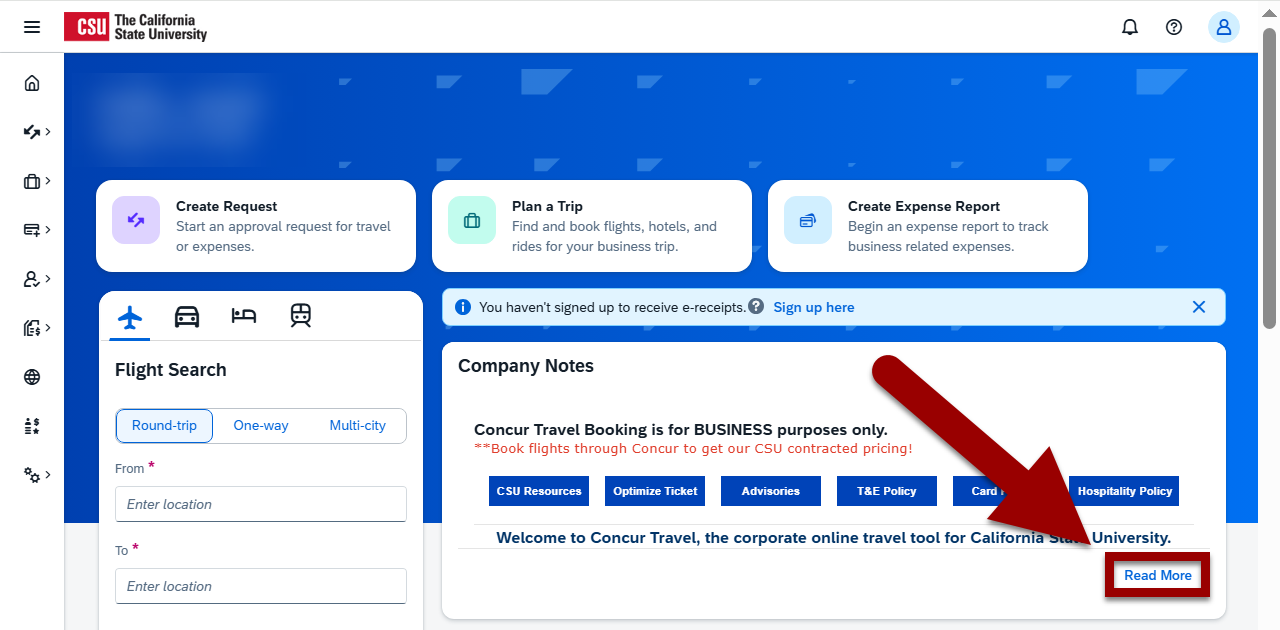
Christopherson’s contact information is available on the Concur landing page under Company Notes. Click on the "Read More" button for detailed information.
Travel Card
Employees who travel five or more times per year may request a Travel Card in their name. Travel card transactions are automatically added to the employee's Concur account and will be billed to a chartfield after the trip is complete.
The Travel Card provides greater flexibility by allowing employees to book directly with airlines, hotels, and other travel providers to secure the best rates for their trip. Employees can also present their Travel Card during hotel check-in.
ProCard
A ProCard may be used for professional development expenses, such as conference and event registration fees. A department administrator may use their ProCard to pay professional development expenses on behalf of another employee.
The ProCard may not be used for airfare, lodging, rental cars, meals, or other travel expenses.
Instant Card
Request an Instant Card to pay for domestic hotels. A smartphone or other compatible device is required.
There are two main ways to use an instant card:
- Contact the hotel and request a Credit Card Authorization Form. You will need to identify the card as a "ghost card."
- Use Online Check-in, rather than present the instant card to the front desk, since virtual cards are sometimes rejected.
Travel Advance
Request a Travel Advance in Concur if you anticipate out of pocket expenses during an international trip.
- Contact financeconnect+concur@sjsu.edu to request that International Travel Advances be enabled in your Concur profile.
- Create a Travel Request in Concur (but don't submit it yet!)
- Under Request Details > Add Cash Advance.
- Identify the Cash Advance Amount and provide justification for the cash advance.
- Add anticipated expenses for your trip.
- Submit the request for approval.
- Payment Services will reach out to you with further instructions on how to receive your cash advance.
Personal Funds
Expenses paid out of pocket during a trip can be submitted for reimbursement if they comply with CSU Travel Policy.
Employee Travel Expenses
An SJSU employee can prepay certain expenses related to their university business travel. Learn which expenses qualify and what payment methods are available.
Registration Fees
Employees can pay for registration fees using:
- Travel Card*
- ProCard*
- Personal Funds
*A department administrator may use their ProCard to pay registration fees on behalf of another employee. However, a Travel Card may only be used for expenses related to the cardholder’s own travel.
Airfare, Car Rentals, and Trains
Employees can pay for airfare, car rentals, and train travel using:
- Concur Booking Tool
- Christopherson Travel Agency
- Travel Card
- Personal Funds
The Concur Booking Tool is strongly recommended for rental cars.
Domestic Hotels
Employees can pay for domestic hotels using:
- Travel Card
- Instant Card
- Personal Funds
Hotel reservations can be secured, but not prepaid, using the Concur Booking Tool
International Hotels
Employees can pay for international hotels and other international travel expenses using:
- Travel Card
- Travel Advance
- Personal Funds
Ride Shares and Shuttles
Employees can pay for rideshares and shuttles using:
- Travel Card
- Personal Funds
Meals and Incidentals
Employees receive a per diem for meals and incidental expenses based on applicable GSA rates. These expenses should not be prepaid and are reimbursed after the trip is complete.
When completing the Expense Report, the traveler must identify which meals were provided and which meals were paid out of pocket so Concur can determine the appropriate per diem reimbursement.
Other Travel Expenses
Other allowable travel expenses, are generally paid by the employee and reimbursed after the trip.
Expenses paid out of pocket can be reimbursed if they comply with the CSU Travel Policy.
Non-Employee Prepayment Methods
SJSU offers three prepayment methods for non-employee travel expenses. Non-employees are defined as students, job candidates, official guests, and suppliers. Please consult with the sponsoring department on their preferred prepayment method.
Christopherson Travel Agency
A sponsoring employee must contact Christopherson directly to book airfare and hotels on behalf of the non-employee traveler. Expenses are automatically added to the sponsoring employee’s Concur account and will be billed to a chartfield after the trip is complete.
Please note that hotels cannot be prepaid and will require a backup payment method.
Christopherson’s contact information is available on the Concur landing page under Company Notes. Click on the "Read More" button for detailed information.
Travel Card
A sponsoring employee may use their Travel Card to pay allowable travel expenses on behalf of a non-employee, including airfare and domestic hotels.
There should only be one sponsoring employee that will coordinate the travel authorization, prepayment, and reimbursement on the traveler’s behalf.
Please note that hotels may require the sponsoring employee to submit a Credit Card Authorization Form to allow for direct billing to their Travel Card.
Personal Funds
Expenses paid out of pocket during a trip can be submitted for reimbursement if they comply with CSU Travel Policy. The traveler should provide receipts to their sponsoring employee, who will submit the Expense Report on their behalf.
Non-Employee Travel Expenses
An SJSU employee must sponsor non-employee travel and coordinate travel authorization, prepayment, and reimbursement on the traveler’s behalf.
Airfare, Car Rentals, and Trains
The sponsoring employee can pay for a non-employee’s airfare using:
- Christopherson Travel Agency (Call them directly)
- Travel Card
Or the traveler can pay with personal funds and seek reimbursement after the trip.
Domestic Hotels
The sponsoring employee can pay for a non-employee’s domestic hotel expenses using:
- Travel Card
- Instant Card
Or the traveler can pay with personal funds and seek reimbursement after the trip.
The sponsoring employee should contact the hotel in advance to determine how to submit a Credit Card Authorization Form so the hotel can charge the Travel Card or the Instant Card without the cardholder being present.
Meals and Incidentals
Non-employee travelers can be reimbursed for actual meal and incidental expenses up to $92 per day. The location-based federal per diem rates used for employees do not apply to non-employees.
These expenses are generally reimbursed after the trip. The traveler should provide the sponsoring employee with the information needed to complete the Expense Report.
Other Travel Expenses
Other allowable travel expenses, such as tolls, parking, rideshares, and shuttles, are generally paid by the non-employee traveler and reimbursed after the trip.
After the trip, the traveler should provide receipts and supporting documentation to the sponsoring employee, who will submit the Expense Report on the traveler’s behalf.
Expenses paid out of pocket can be reimbursed if they comply with the CSU Travel Policy.